What Is a Handfasting Ceremony, and Should You Have One?
If you've been down a wedding Pinterest rabbit hole recently, you've probably come across handfasting. It looks beautiful, it sounds ancient and meaningful, and you're half-tempted, but you’re also half-wondering if it's a bit much. Let me break it down for you.
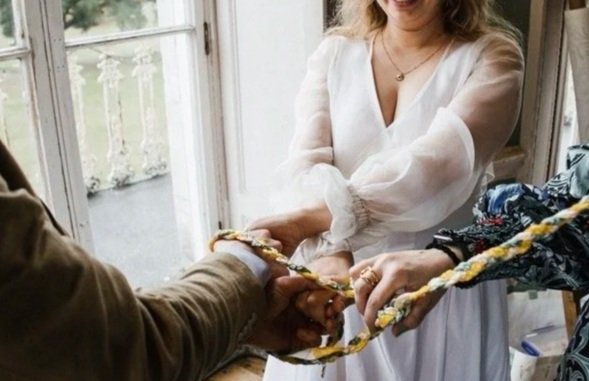
Handfasting is a ritual where the couple's hands are bound together with ribbon, cord, or fabric during the ceremony. It's literally where the phrase 'tying the knot' comes from. It's thought to have Celtic and Pagan roots going back thousands of years, and it's been making a proper comeback in modern weddings. And honestly, I'm here for it!
During a handfasting, the celebrant (that's me) wraps your hands together while saying words about what the binding symbolises: your commitment, your promises, your future together. Some couples choose specific colours for their ribbons, each representing something meaningful: red for love, green for growth, gold for wisdom. Others pick fabrics or patterns that have meaning to them. Some just choose what goes with their colour scheme. All choices are valid.
The whole ritual usually takes a few minutes and sits beautifully within a ceremony, often after the vows and ring exchange, or sometimes instead of a ring exchange for vow renewals.
Should you have one? Honestly, only if it means something to you. Handfasting works brilliantly for couples who want a tactile, visual moment in their ceremony, something that makes the abstract idea of commitment feel real and physical. It also gives your guests something to watch and feel connected to.
It doesn't have to be spiritual or Pagan at all. I've done handfastings for completely non-religious couples who just loved the symbolism of it. As with everything in a celebrant-led ceremony, it's entirely your call.
If handfasting sounds like your kind of thing, or if you want to chat through other rituals for your ceremony, I'd love to hear from you. Hit the button below!